
J.C. Leyendecker (March 23, 1874 – July 25, 1951) was the early 20th-century artist and illustrator whose work was spread across the country on the covers of Collier's and The Saturday Evening Post magazines. Active between 1895 and 1951, he produced drawings and paintings for hundreds of posters, books, advertisements, and magazine covers and stories. He was also prominently featured in advertising campaigns, most often for Arrow brand shirts and B. Kuppenheimer men's clothing. He would create 80 covers for Collier's and 322 for The Saturday Evening Post before being slowly phased out and replaced by Norman Rockwell. He was also gay, often using his long-time partner and model Charles A. Beach as his inspiration. The two were a couple from 1903 until his death in 1951. What was subtle at the time and blatantly obvious now is how his sexuality influenced his illustrations, playing with gender and masculinity to sell everything from underwear to war bonds.
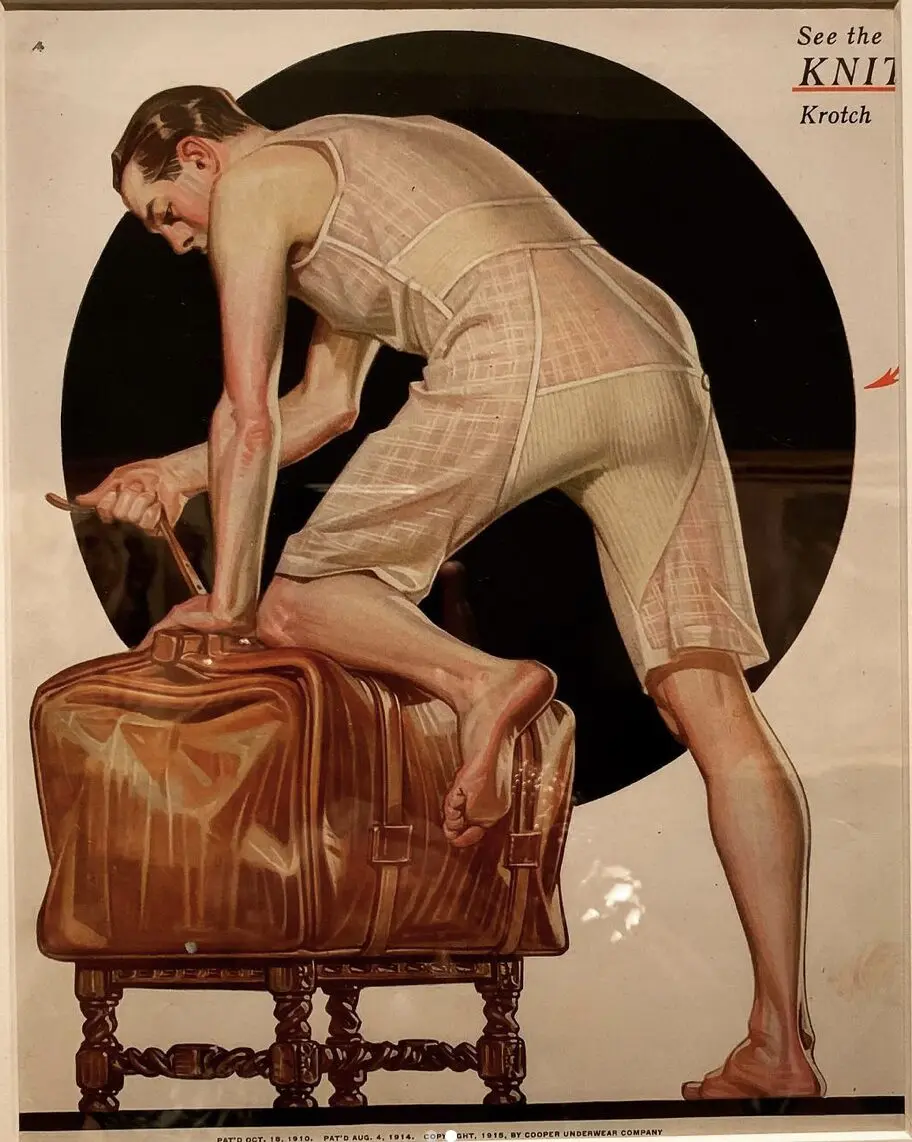
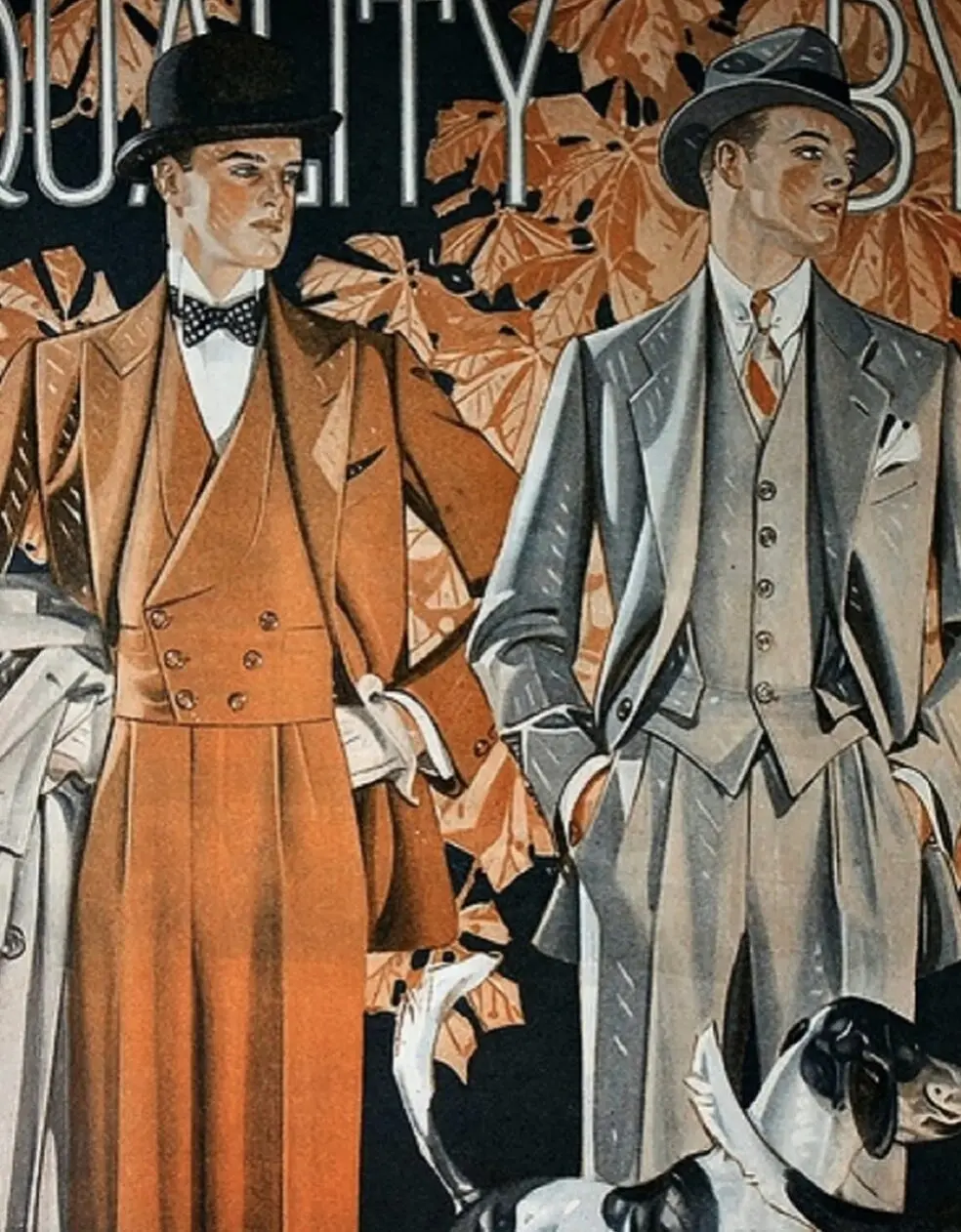
As quoted in The Advocate in 2023, New York Historical Society guest curator Donald Albrecht who organised a showing of Leyendecker's work at the time, hahd this to say about the prolific artist: “J.C. Leyendecker was an amazingly talented artist whose illustrations have come to embody the look and feel of the first half of the century while simultaneously demonstrating how fluidity in gender expression and queer representation were actually quite common at the time, contrary to current assertions that they are unique to our own moment. Not only did his work exemplify the zeitgeist, but it also depicts a deeply nuanced view of sexuality and advertising that broadens our understanding of American culture.”
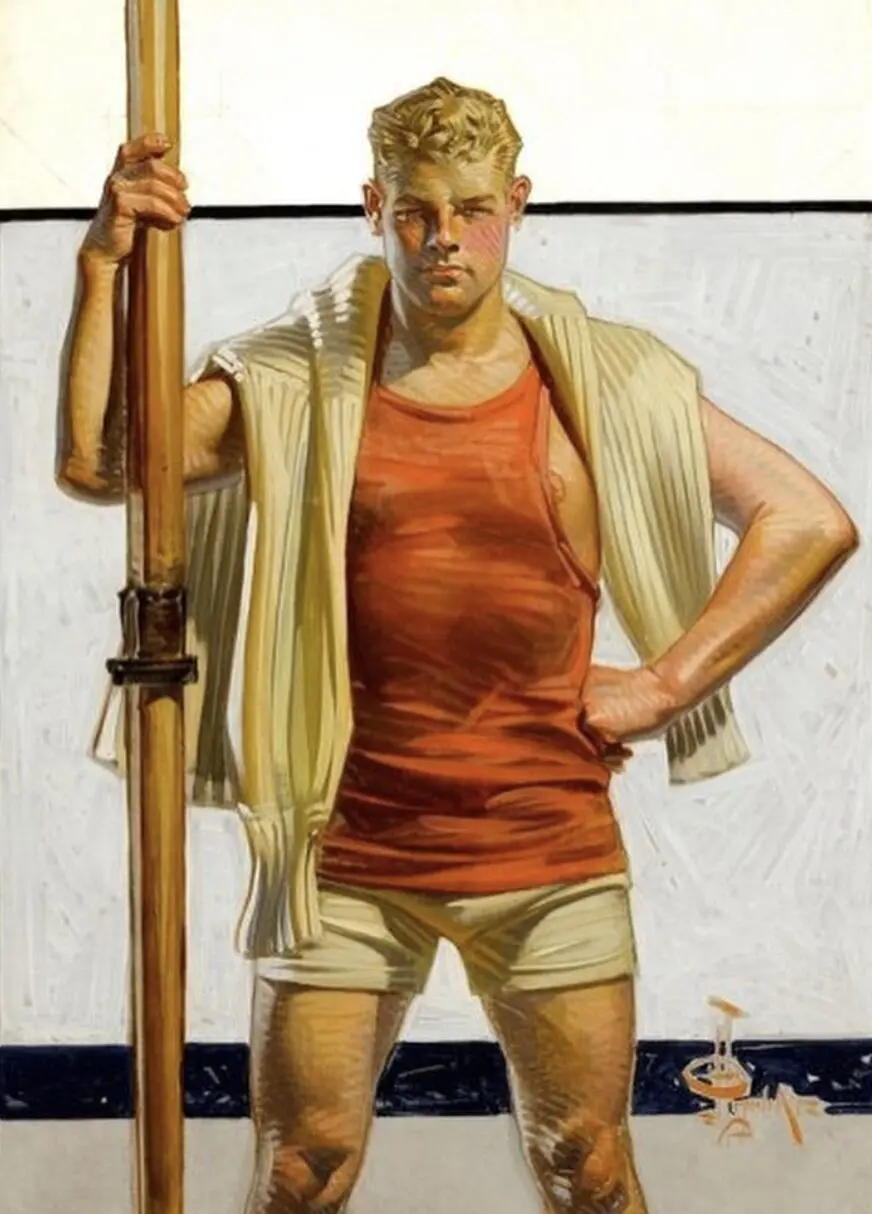
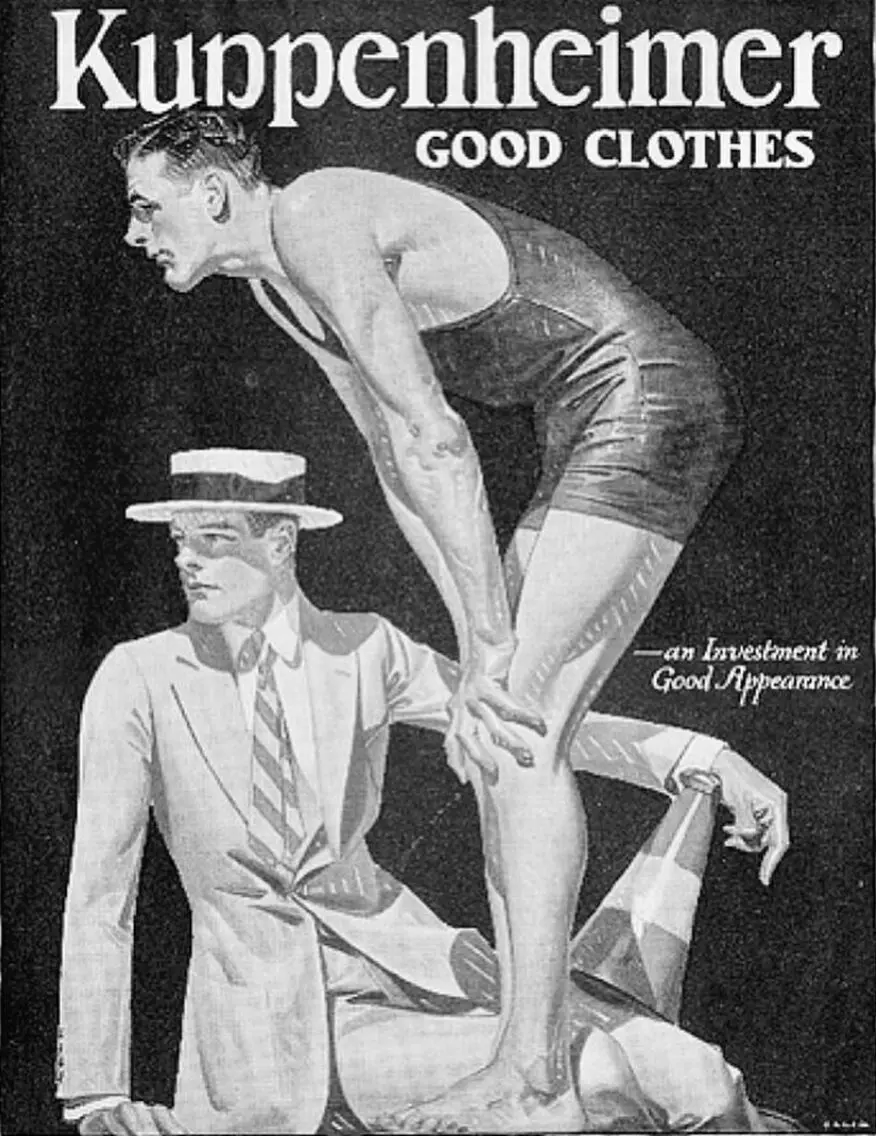
This was queer coding at its highest form. And to be honest, it couldn't have been altogether hidden messaging. Some of his work seems rather obvious nowadays, and it's hard to believe it wasn't looked on as "obviously gay" back then. Take the following picture, for instance. It may just be an ad for shirts to many, but it displays unmistakable intimacy between the two subjects.
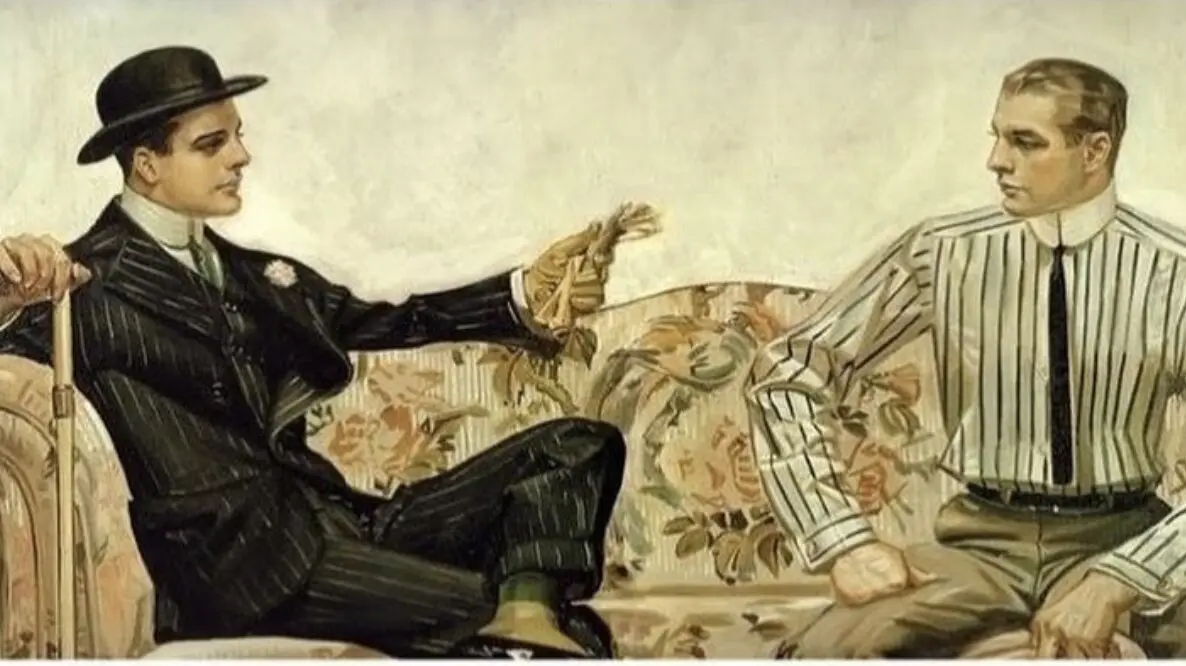
As Neil Broverman said in The Advocate, Leyendecker's works "don’t have a gay subtext; they’re just gay."
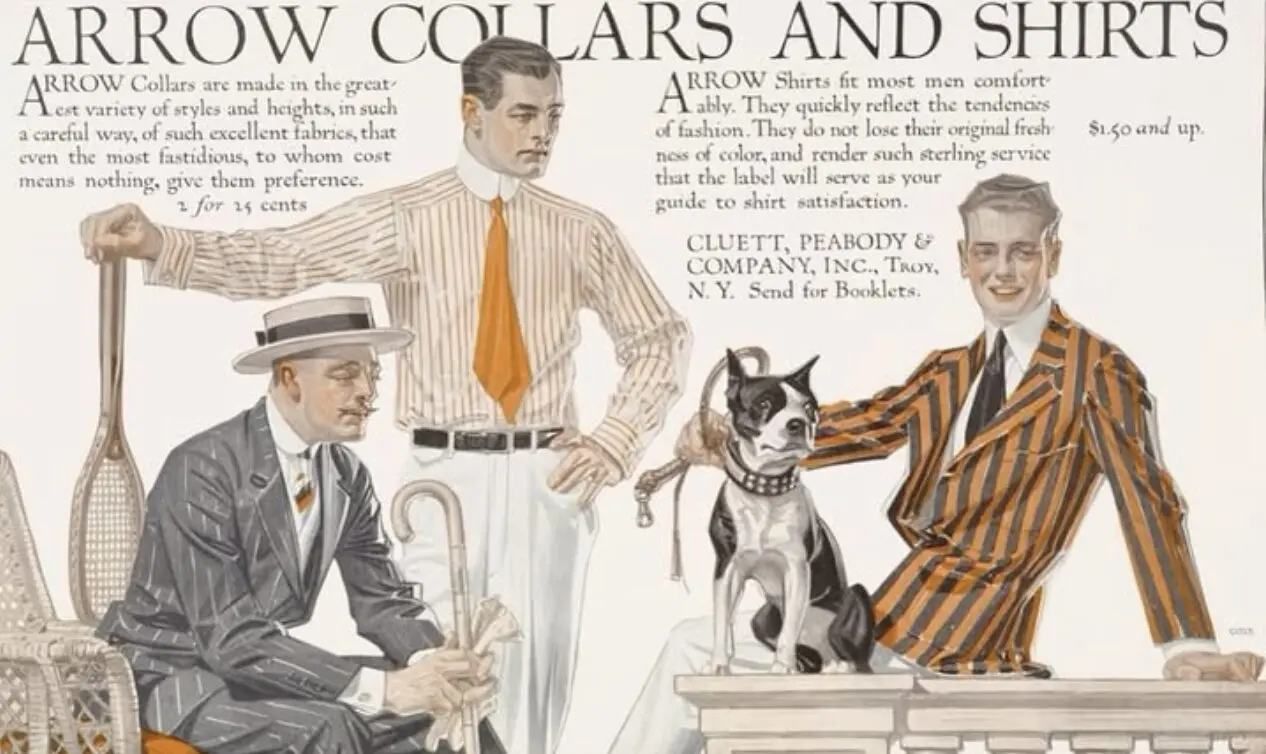
One can only guess why Leyendecker's star started to fade in the last couple of decades of his life. One might surmise that as America moved into a post-stock market crash of 1929 world and into the Great Depression of the 30's, such displays of wealth and glamor simply weren't to everyone's liking, taste, or accessibility anymore. And with the coming world war of the 30s and 40s, a "new type of man" and stricter gender identities and roles were more in style. Leyendecker was about high style, while Rockwell, who was a friend of Leyendecker and would serve as a pallbearer at his funeral, represented a burgeoning desire for small-town Americana.
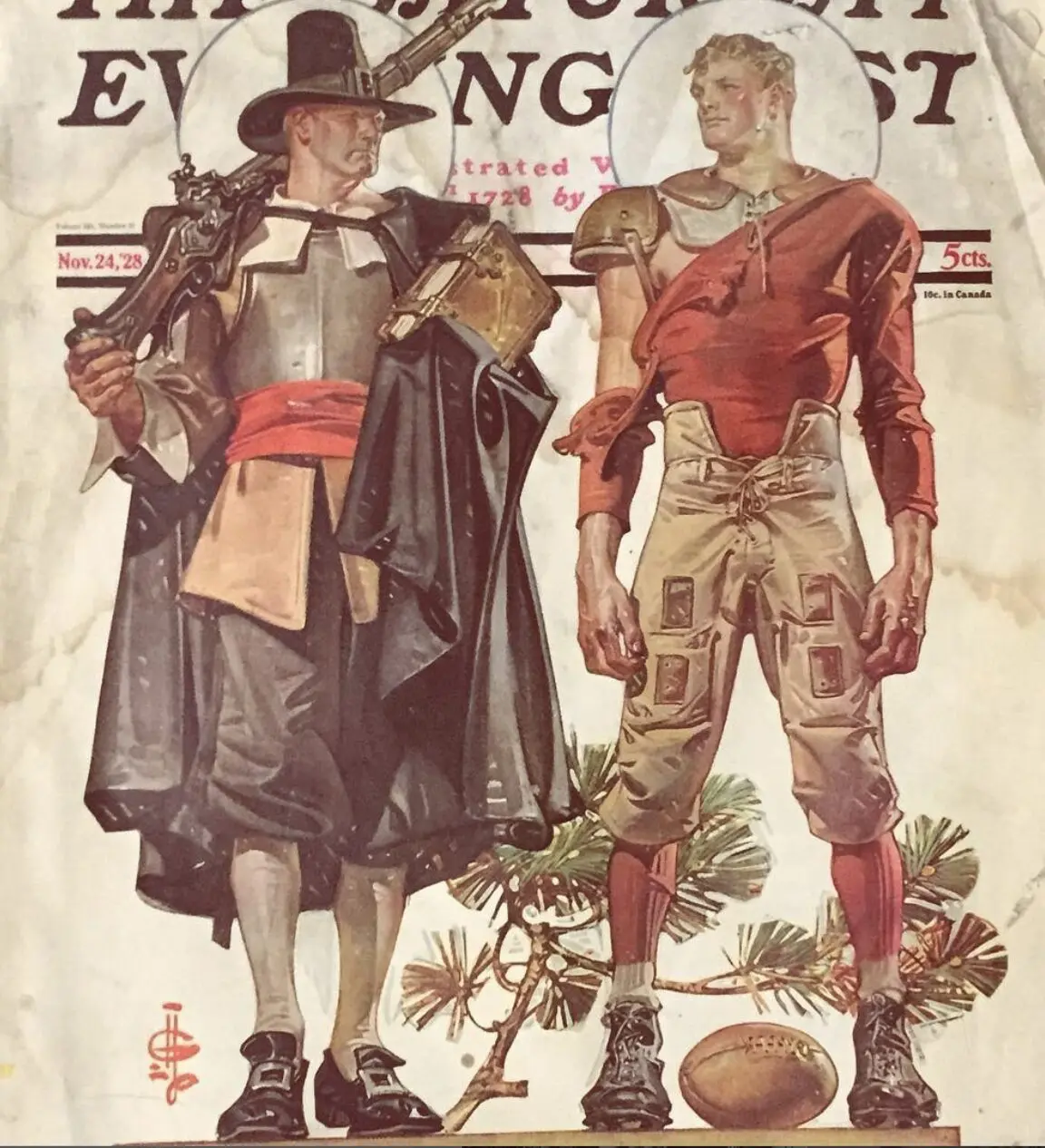
Tell me the above pic isn't a cornucopia of gay intent and kinky fetishwear!
But his vision defined early-20th-century style and American taste, and several lasting images we carry today originated with his indelible magazine covers: Santa with his red, fur-lined coat and round belly; The New Year's Baby; the tradition of giving flowers on Mother's Day, all sprang from Leyendecker's artwork on The Saturday Evening Post. You've grown up with and enjoyed his work, whether you knew it or not.
You can learn more about Leyendecker and his personal life in the 2021 documentary Coded: The Hidden Love of JC Leyendecker.
Questions? Comments? Email us at [email protected]
Follow us on Twitter and Instagram.











© 2026 NSFW.Army. All Rights Reserved